Digital Dispatch Note Phase B from 12 October 2026: QR scanning and quantity receipt notes
Phase B of Greece's Digital Dispatch Note becomes mandatory in two stages, from 12 October 2026 and 1 January 2027. The receiver's role, QR scans, discrepancies and Quantity Receipt Notes need clear internal procedures.
Update: The mandatory start of Phase B has been extended and now applies in two stages: from 12 October 2026 (loading, transshipment, receipt and quantity/quality checks) and from 1 January 2027 (TARIC item coding). Where this article mentions 1 May 2026, the new dates now apply. See the Phase B extension.
From 1 May 2026, Phase B of Greece's Digital Dispatch Note becomes mandatory for all liable entities. Phase A has already been mandatory since 1 December 2025, while Phase B applied optionally until 30 April 2026.
In practice, from 1 May 2026 it is not enough to issue and transmit the dispatch document digitally at the start of the movement. The full digital monitoring of stock movements is activated, with emphasis on QR code scanning, receipt of goods, transshipments, and the receiver's quantitative and qualitative control.
The main point for businesses is that Phase B gives the receiver an active role. For intra-Community acquisitions and imports from third countries, businesses must also document correctly when a Quantity Receipt Note (10.1 / 10.2) is required.
What changes between Phase A and Phase B
Phase A
Phase A mainly covers digital issuance of the dispatch document, transmission to myDATA before the start of the movement, and assignment of a unique identity and QR code.
Phase B
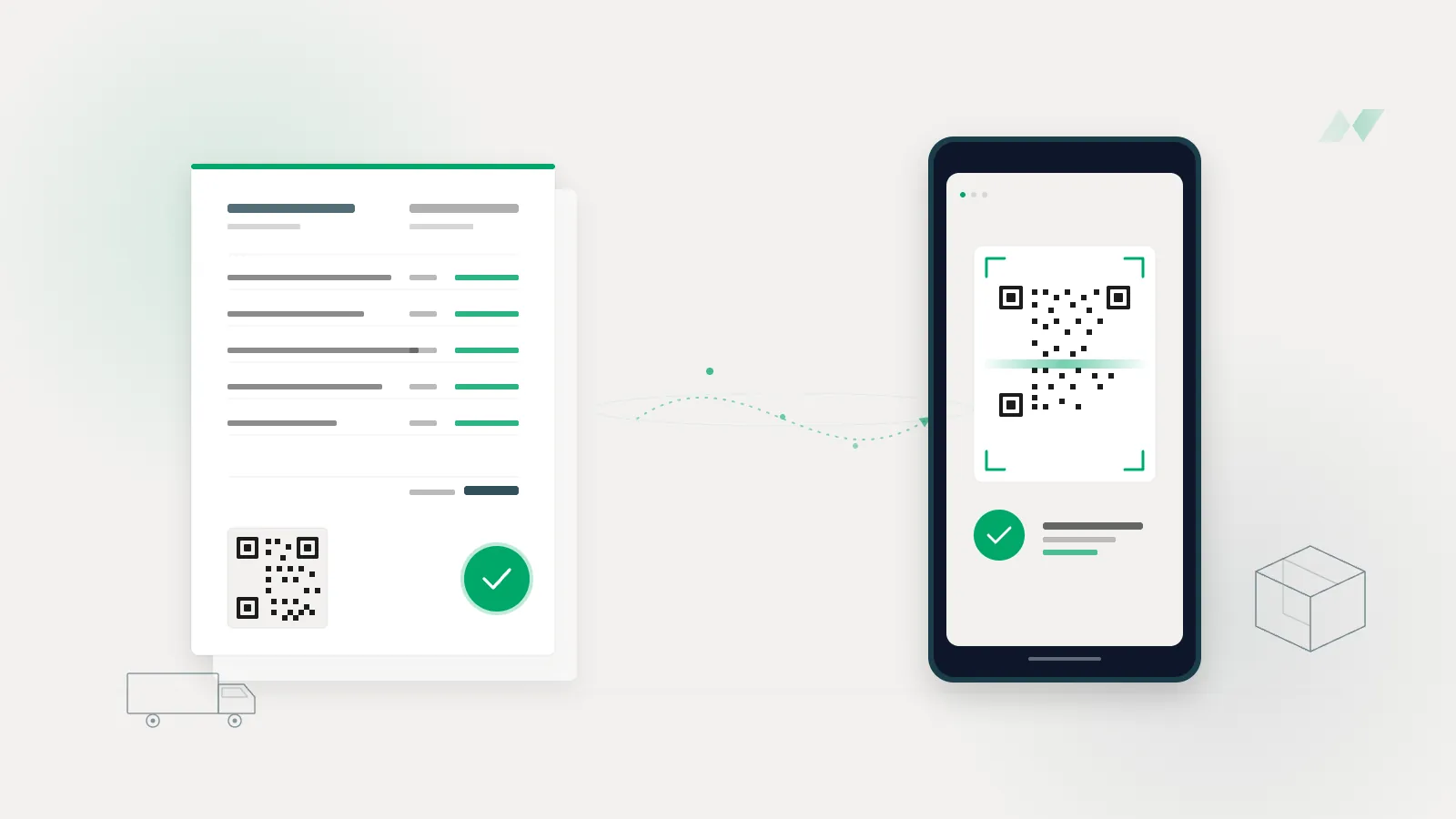
Phase B adds digital monitoring of loadings and transshipments, receipt of documents and goods through QR code scanning, quantitative and qualitative control by the receiver, and completion of the movement through acceptance, discrepancy or rejection according to the actual event.
What this means for the issuer
The issuer of the dispatch document must issue the correct document before the movement starts, transmit the relevant data to myDATA, ensure that the document carries the required QR code, make it available to the carrier, receiver and tax audit, and monitor complex movements such as transshipments or third-party roles.
If connectivity is lost, digital documents are issued with the relevant indication and transmitted immediately when the connection is restored.
What this means for the receiver
Phase B no longer treats the receiver as passive. The receiver now has substantive obligations in the process.
Receipt from a Greek issuer
When goods are received from a Greek issuer, the receiver transmits acceptance of receipt to myDATA by scanning the QR code, in real time corresponding to completion of receipt.
Quantitative and qualitative control
The receiver must check whether the goods received match the dispatch document. If the check is correct, the movement is completed normally.
Surpluses or shortages
If the check identifies surpluses or shortages, the receiver issues a Quantity Receipt Note for the positive or negative difference and transmits the relevant data within fifteen (15) days from the receipt date.
Non-liable or non-cooperative issuer
The receiver also has a role where the counterparty is not liable to issue a dispatch document, refuses to issue one, failed to issue one by mistake, or where an incorrect transmission or non-acceptance must be documented. Depending on the case, myDATA documentation may require a Quantity Receipt Note.
For surplus or shortage discrepancies, transmission is made through a Quantity Receipt Note, generally using type 10.1 - associated Quantity Receipt Note where it is linked to a previous movement document. For receipts from a non-liable party, a liable party that did not issue a document, or a foreign issuer, types 10.1 or 10.2 may apply depending on the case and whether association is possible.
Quantity Receipt Notes for intra-Community acquisitions and third-country purchases
This is one of the areas that creates the most practical questions. Under the current Phase B framework, when a Greek business receives stock from a foreign issuer, meaning an intra-Community acquisition or an acquisition from a third country, the receiver transmits to myDATA non-value movement document types, namely Quantity Receipt Notes (10.1 / 10.2), within five days from the receipt date.
The foreign sender's accompanying document may be used as the movement document in these cases, such as the invoice, international transport documents or another accompanying document for the movement.
Practical example
A Greek company receives goods from a supplier in Germany. The cargo is accompanied by the invoice and transport documents. Upon receipt in Greece, the Greek receiver must transmit a Quantity Receipt Note 10.1 or 10.2 within five days from receipt so that the movement and received quantity are properly documented. The same applies to receipt of goods from a third country.
Penalties businesses should know
Movement without a dispatch document
For movement of goods without dispatch documentation, the fine is €5,000 per tax audit for single-entry bookkeeping and €10,000 per tax audit for double-entry bookkeeping.
Non-transmission of digital dispatch documents
Failure to transmit digital dispatch documents carries a fine of €100 per non-transmission, up to €500 per day and up to €20,000 per tax year.
Late transmission
Late transmission carries a fine equal to 50% of the corresponding non-transmission fine.
Key exceptions to remember
Exceptions should always be checked by sector and actual movement flow. The current framework includes, among others, special VAT regime farmers, continuous-flow networks, movement of necessary tools and machinery by technicians, fixed assets not intended for sale, and special cases involving the "Eudoxus" and "Diophantus" distribution systems. The A.1083/2026 amendments also added or clarified exceptions for empty packaging, specific industrial or craft goods moved by qualifying outdoor-market retailers, and repeated wholesale sales of medicines, optical and other goods to EOPYY or insurance funds when delivered to insured persons. For postal, courier and HUB flows, apply the conditions and clarifications of E.2016/2026; the internal electronic system must provide the required information in real time and make it immediately available in a tax audit.
What businesses should do before full application
- Check ERP readiness: digital dispatch issuance, QR code handling, receipt confirmation, transshipments, discrepancies and 10.1 / 10.2 documents.
- Define warehouse and receiving procedures: who scans, who accepts receipt, who performs the check, who issues Quantity Receipt Notes and who monitors the five-day foreign-issuer deadlines and the fifteen-day discrepancy deadlines.
- Map special flows: foreign issuers, intra-Community acquisitions, third-country purchases, returns, courier / HUB / 3PL movements and incorrect or missing documents.
Conclusion
Phase B of the Digital Dispatch Note changes everyday business operations. It is no longer only about issuing a digital document at the start of the movement; it covers the full monitoring chain from loading to final receipt.
The role of the receiver is where most practical errors occur: acceptance of receipt, discrepancies and correct use of the Quantity Receipt Note, especially in intra-Community acquisitions and third-country purchases.
Frequently asked questions
When does Phase B become mandatory?
For all liable entities, from 1 May 2026.
What must the receiver do in Phase B?
For receipt from a Greek issuer, the receiver confirms receipt by scanning the QR code. If a discrepancy is found, the receiver must issue a Quantity Receipt Note within the prescribed deadline.
When is a Quantity Receipt Note issued?
Indicatively, when surpluses or shortages exist, when the issuer did not issue a dispatch document, when there is non-acceptance or incorrect transmission, or when the receipt is from a foreign issuer.
How quickly must a discrepancy be transmitted?
For surplus or shortage discrepancies, the Quantity Receipt Note is transmitted within fifteen (15) days from receipt.
What applies to intra-Community acquisitions and third-country purchases?
The Greek receiver transmits a Quantity Receipt Note 10.1 or 10.2 within five days from receipt, using the invoice or another document of the foreign sender as the accompanying movement document.
Legal basis and sources
This article reflects the framework in force on 23 April 2026 and is based in particular on AADE decisions A.1122/2024 and A.1123/2024, as amended by A.1046/2025, A.1047/2025, A.1052/2025, A.1145/2025 and A.1083/2026, the relevant clarifications of circular E.2016/2026, and the Tax Procedure Code Law 5104/2024, as in force.
Aptax supports businesses with myDATA implementation, movement-document procedures and ERP / warehouse adaptation for the new Digital Dispatch Note requirements. Contact us for a practical compliance review.